News
Landmark agreement ensures sustainability of Luxembourg Parkinson’s programme
Luxembourg reinforces its position as a hub for precision medicine in Parkinson’s disease research
- Parkinson’s Disease
- Transversal Translational Medicine (TTM)
- Luxembourg Research Clinic – Fuerschungsklinik Lëtzebuerg
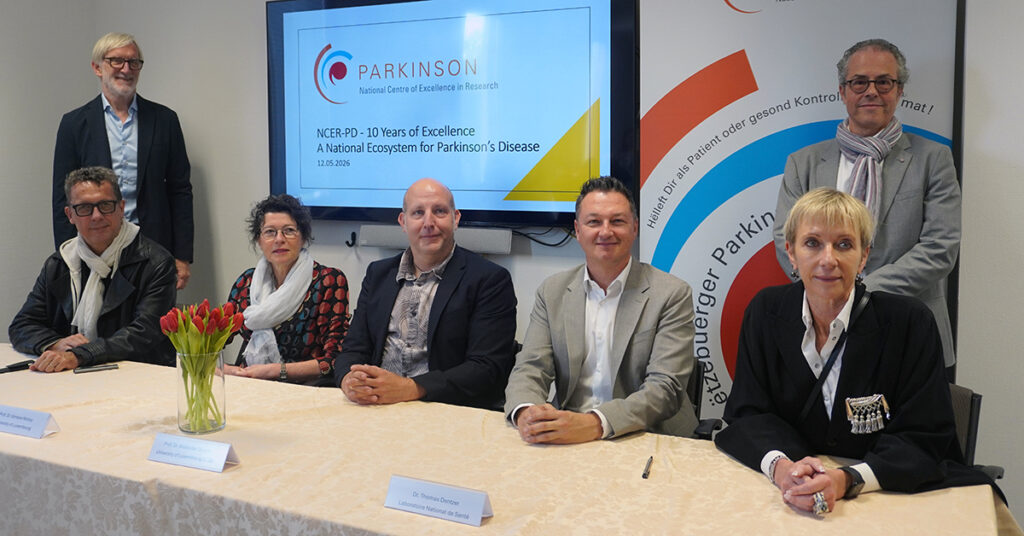
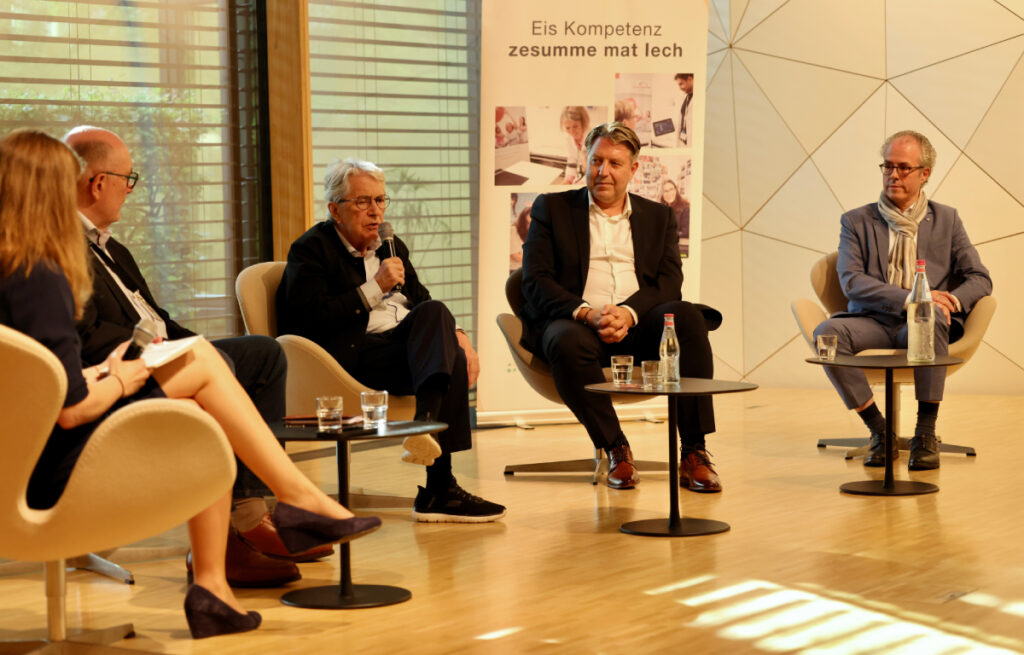
On 12 May, the National Centre for Excellence in Research on Parkinson’s disease (NCER-PD) held a signature event at the new Luxembourg Research Clinic commemorating the signing of a consortium agreement following two successful phases funded by the Luxembourg National Research Fund (FNR). NCER-PD has now become the first National Centre of Excellence in Research programme in Luxembourg to realize long-term sustainability.
Bringing together key national partners including the Luxembourg Institute of Health (LIH), the University of Luxembourg (UL), the Centre Hospitalier de Luxembourg (CHL) and the Laboratoire National de Santé (LNS), the initiative exemplifies a highly integrated, collaborative approach to research and care. The programme also closely collaborates with the Hôpitaux Robert Schuman (HRS) and the Centre Hospitalier Emile Mayrisch (CHEM), notably for medical imaging and participant visits.
Achieving long-term sustainability is a defining moment for NCER-PD and for translational research in Luxembourg. By bringing together research and care, we have built a strong foundation for precision medicine and prevention
said Prof. Dr Rejko Krüger, NCER-PD coordinator.
Over the past decade, NCER-PD has established Luxembourg as an important player in Parkinson’s disease research worldwide. The programme has advanced precision medicine and prevention by combining deep clinical phenotyping with molecular profiling, supported by a large number of participants that are monitored on a continuous basis. This unique resource has also contributed to international research efforts and strengthened Luxembourg’s visibility in the global Parkinson’s community, a fact reflected by NCER-PD joining the prestigious Parkinson’s Precision Medicine Initiative (PPMI) study led by the Michael J. Fox Foundation in 2022.
By fostering close collaborations between research institutions and clinical partners, NCER-PD has also delivered major advances in translational research, including the identification of genetic profiles defining subgroups of PD, the discovery of novel biomarkers and the development of personalised disease models. It has also enabled access to innovative treatments for people with Parkinson’s by joining international clinical trials, such as PADOVA and PRECODE, supported by dedicated clinical research infrastructure.
Beyond its scientific impact, NCER-PD has also recruited and trained specialised Parkinson’s health professionals, including neurologists and nurses, thereby contributing to Luxembourg’s medical education and clinical research capacities. It also fostered the creation of ParkinsonNet Luxembourg, the first integrated care network that improves the quality of life of people with Parkinson’s by giving them access to specialised healthcare professionals.
“Within the new Luxembourg Research Clinic, programmes such as NCER-PD provide a blueprint for how integrated, patient-centred research can be conducted at scale. Building on this model, we will continue to expand clinical studies, strengthen collaboration across institutions, and ensure that patients benefit directly from innovative research and advanced care,” said Prof. Dr Christof von Kalle, Head of the Luxembourg Research Clinic.
Scientific Contact
Related News