News
Kein Frühsommer-Meningoenzephalitis-Virus in etwa 4.500 Zecken aus ganz Luxemburg nachgewiesen

Die Frühsommer-Meningoenzephalitis (FSME) ist eine der häufigsten und am weitesten verbreiteten durch Zecken übertragenen Infektionen in Europa. Bis vor Kurzem wurde sie hauptsächlich mit Mittel- und Osteuropa in Verbindung gebracht, und bislang wurden in Luxemburg keine autochthonen Fälle gemeldet. Das Virus, das diese Krankheit verursacht, breitet sich jedoch geografisch weiter aus, und Länder wie Belgien, die Niederlande und das Vereinigte Königreich gelten inzwischen als betroffen (link). Das FSME-Virus (FSMEV) wird hauptsächlich zwischen kleinen Säugetieren durch Zecken der Art Ixodes ricinus übertragen, die in Luxemburg weit verbreitet sind, kann aber auch den Menschen infizieren und potenziell schwere Erkrankungen mit neurologischen Folgeschäden verursachen.
Um einen frühzeitigen Nachweis von FSMEV in Luxemburg sicherzustellen, wurde im Rahmen des EU-kofinanzierten Projekts OH4Surveillance (2024–2026) ein Überwachungsprogramm eingeführt. In einem früheren Bericht beschrieben wir die Untersuchung von 510 Dermacentor reticulatus-Zecken, die freundlicherweise vom Nationalmuseum für Naturgeschichte Luxemburg zur Verfügung gestellt wurden, auf FSMEV.
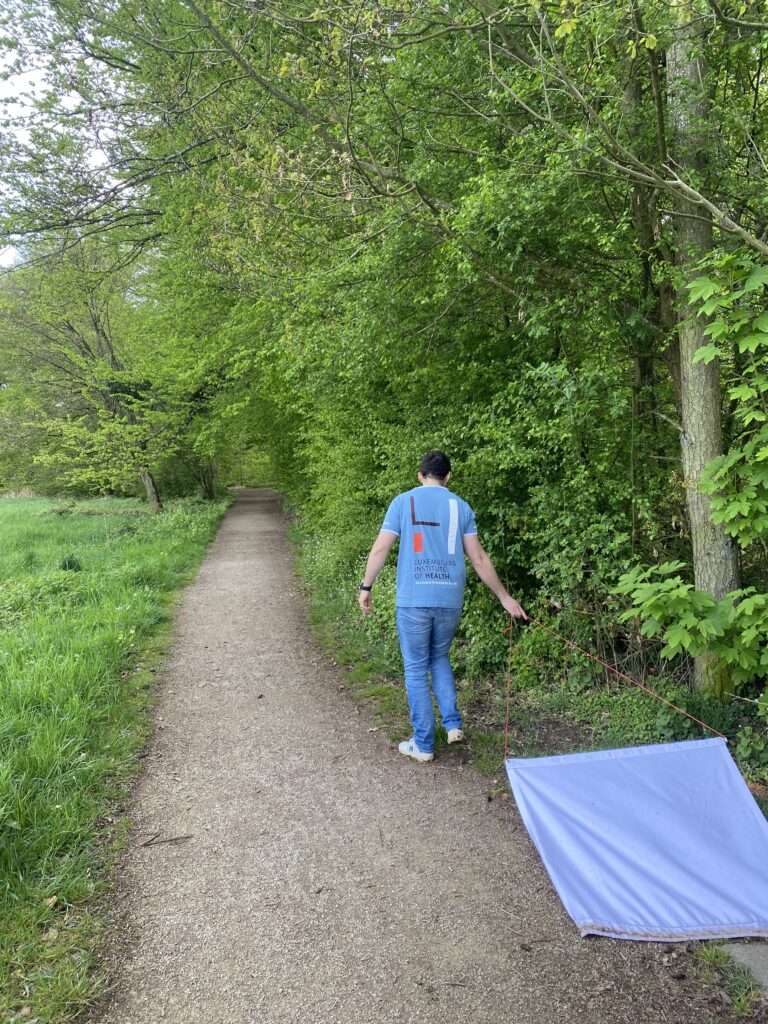
Im Jahr 2025 sammelten wir etwa 4.500 Zecken in 41 ländlichen, vorstädtischen und städtischen Gebieten in ganz Luxemburg, die häufig von der Bevölkerung besucht werden. Anschließend wurden die Zecken auf FSMEV untersucht, wobei kein Erreger nachgewiesen wurde. Das Fehlen des Virus in den untersuchten Zecken bedeutet jedoch nicht zwangsläufig, dass es im Land nicht vorhanden ist. Die Prävalenz von FSMEV kann sehr gering und lokal begrenzt sein, was den Nachweis ohne umfangreiche Probenahmen erschwert. Eine fortlaufende Überwachung ist daher notwendig und sollte auf weitere Probenarten, einschließlich Proben von Wildtieren, ausgeweitet werden.
Haftungsausschluss
Diese Aktivität wird durch eine Kofinanzierung des EU4Health-Programms der Europäischen Union im Rahmen der Finanzhilfevereinbarung Nr. 101132473 OH4Surveillance unterstützt.
Die geäußerten Ansichten und Meinungen spiegeln nicht unbedingt die der Europäischen Union oder von HaDEA wider. Weder die Europäische Union noch die Bewilligungsbehörde können dafür verantwortlich gemacht werden.
Scientific Contact
Ähnliche News