News
LIH researcher joined the “Young Leaders Program” of the STS Forum in Kyoto
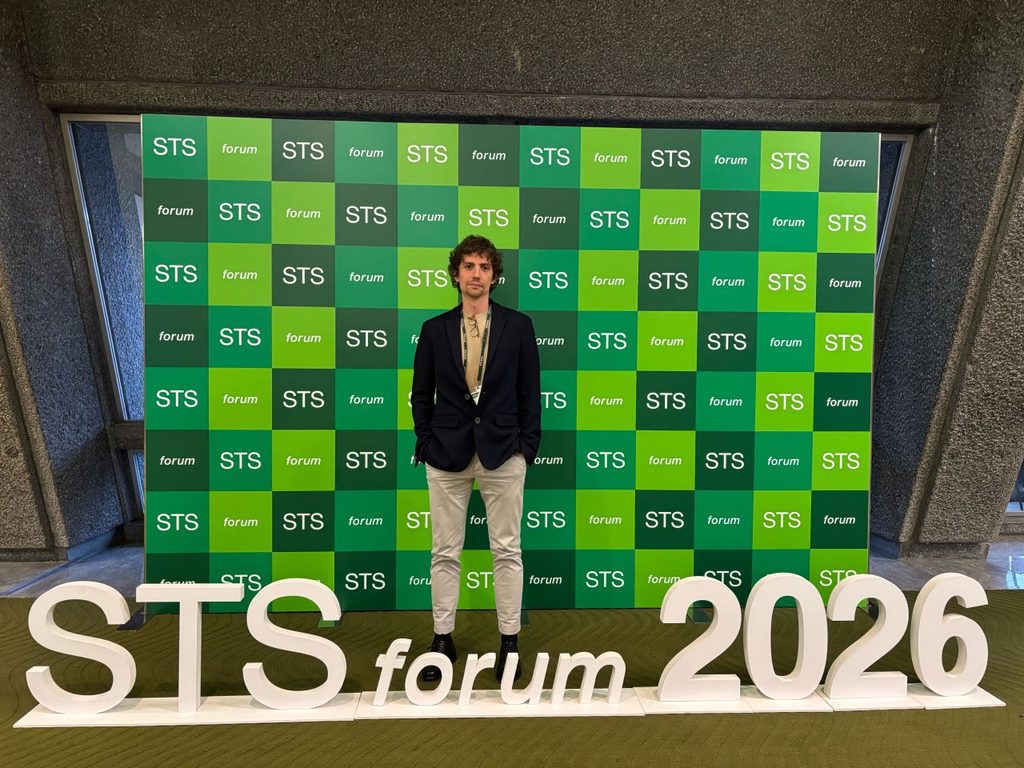
The 23rd Science and Technology in Society (STS) Forum 2026 took place in Kyoto, Japan, from October 4-6, 2026. More than 1,600 leaders in academia, business and policymaking gathered to discuss topics at the crossroads of science, technology, and society. Dr Ángel Álvarez-Prado, Group Leader of the Translational Cancer Immunogenomics (TCI) Laboratory at the Luxembourg Institute of Health, was selected to participate in the event as part of the “Young Leaders Program”.
Ángel, this seems far from a conventional scientific conference. What’s the idea behind this forum?
The purpose of the event was to bring together people from different sectors, including academia, industry and policymakers, to discuss the impact of recent scientific and technological advances on society, explore the opportunities they create, and reflect on the challenges they pose.
What themes were discussed and what stood out most to you?
Several topics were discussed, ranging from artificial intelligence (AI) to genetic engineering and life design. A theme that stood out is the fast pace of technological development imposed by AI, and how to adapt to the rapid changes it brings to our daily lives. A major point of discussion was how to approach the transformations driven by AI-based technologies, to ensure that innovation translates into social progress while maintaining safeguards.
What inspired you the most from the whole event?
The opportunity to meet and exchange perspectives with people from different fields: it was very informative to hear the views and priorities of those working outside academia, as we often approach the same challenges from different angles. Such exchanges were very helpful to understand the bigger picture, as well as our role as scientists in it.
Can you describe the atmosphere of the event in three words?
Friendly, collegial and collaborative: everyone was treated as peers!
Who did you have the occasion to meet?
As a participant of the Young Leaders Program, I had the opportunity to take part in open conversations with some Nobel Laureates. We sat down with Dr. Brian Schmidt, recognized for his work on the expansion of the universe, who talked about challenges in academia and about his efforts building bridges with policymakers, and argued in favor of individual accountability as a key safeguard to protect society against potential misuse of AI. Dr. Richard Roberts, known for discovering gene splicing, told us about his path from academic research to industry, and how he manages to still foster basic research within industry.
I also had the pleasure to join a round table with Maria Leptin (President of the European Research Council) to discuss about mirror life – a hypothetical form of life composed by mirror-image molecules – and how to establish checkpoints to mitigate its risks. It was particularly refreshing to see such a close understanding of research realities and challenges.
I also appreciated the exchanges with Fiona Watt, EMBO Director and pioneer in the field of stem cell biology, with whom we discussed about the ethical limits of regenerative medicine and life design.
It was a pleasure to share this experience with Étienne Fodor (University of Luxembourg), Marie-Claude Marx (FNR Programme Manager) and Isabelle Mossong (FNR Secretary General).
What is one takeaway message that you would like to leave?
This meeting was a great reminder that academia, industry and policymakers play equally important roles in shaping scientific and technological developments, and how these finally land on society. Opportunities for exchange, such as networking events where different communities take the time to understand each other’s priorities, constraints, and perspectives, help foster collaboration. By building this mutual understanding, we can better support one another in driving technological progress at the right pace and in the right direction.
Supported by the Luxembourg National Research Fund
Scientific Contact
Related News