News
Modelling brain tumours brings precision medicine closer for neuro-oncology
New Nature review highlights how organoids, laboratory made tumour avatars, could transform research and accelerate the treatment of aggressive brain cancers
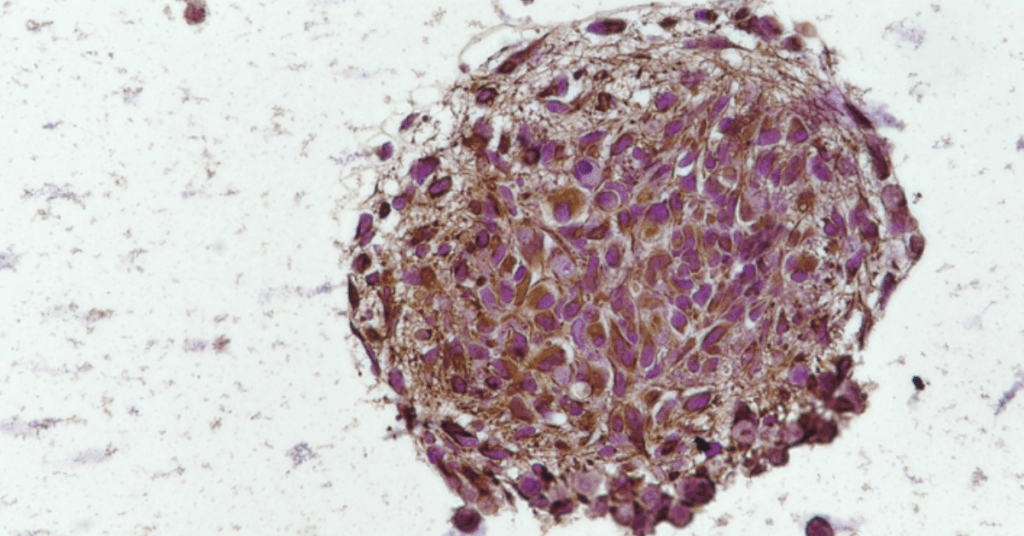
Researchers are increasingly turning to laboratory grown replicas of brain tumours to better understand how they develop and respond to therapy. A new review published in Nature Reviews Neurology examines how organoids are emerging as powerful tools for precision medicine in neuro-oncology.
Brain tumours are among the most difficult cancers to study. They consist of highly heterogeneous and dynamic populations of tumour cells that interact with their surrounding microenvironment. Traditional laboratory models, such as two-dimensional cell cultures, often fail to capture this complexity, limiting their utility for understanding tumour biology or predicting treatment responses.
Organoids offer a promising alternative. These three-dimensional cell structures are grown from patient tumour samples and reproduce many features of the original tumour, including its cellular diversity and spatial organisation. As a result, they provide a more realistic model for studying tumour initiation, progression, and resistance to treatment. Researchers are also increasingly combining organoids with genomic and molecular profiling to better understand the drivers of tumour behaviour.
In their new review in Nature Reviews Neurology, researchers from the Luxembourg Institute of Health (LIH) and the University of Luxembourg discuss recent advances in organoid technology and its potential to improve the study and treatment of complex brain cancers.
Brain tumours are extremely diverse and complex, and replicating that complexity in the laboratory has been a major challenge. Organoid models allow us to preserve or genetically recreate many of the defining features of a patient’s tumour and study how it evolves and responds to treatment in a controlled setting,
said Anna Golebiewska, lead author and head of the NORLUX Neuro-Oncology laboratory at the LIH.
Beyond basic research, the authors highlight the growing potential of organoids as platforms for functional drug screening. By screening different therapies on patient-derived organoids, scientists may be able to identify the most effective treatment strategies before they are applied in the clinic.
Although technical and logistical challenges remain, the researchers conclude that organoid technologies could become an important bridge between laboratory research and clinical care. As these models continue to improve, they may play a central role in bringing truly personalised approaches to patients with devastating brain tumours.
Scientific Contact
Related News