
🇬🇧 Structural basis of glycan diversity in biological systems
- Omics meets physics
Speakers
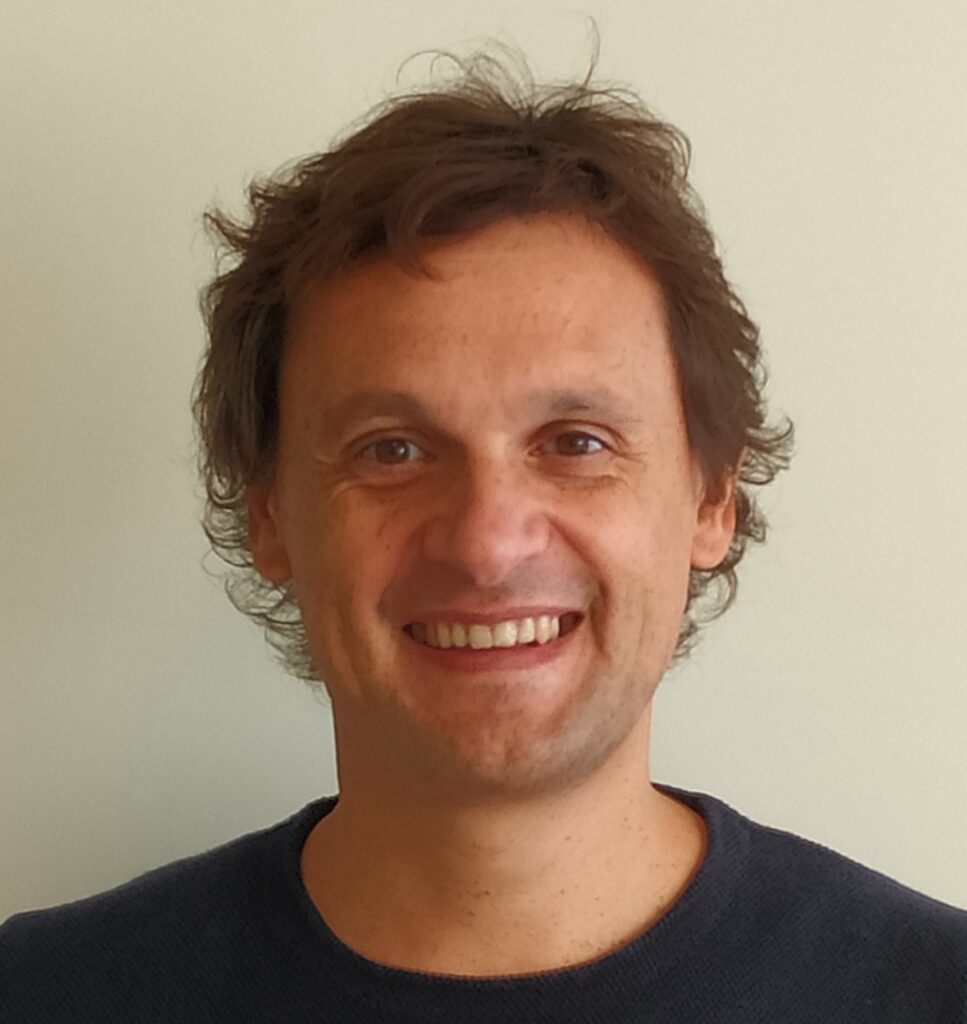
Guerin
CSIC Full Research Professor in Structural Biology/Glycobiology,
Group Leader Structural Glycobiology Lab, IBMB Barcelona, Spain
Abstract
Glycosylation is one of the most prevalent posttranslational modifications of proteins and lipids. It markedly influences their structure and function, and plays a central role in nearly every aspect of biology. A deeper understanding of glycosylation —and the ability to precisely and rationally modulate it— are essential for advancing our fundamental biological knowledge and for developing innovative therapeutics across a wide range of human diseases.
In this talk, I will present our recent findings and advances in the following research areas:
(i) Rationalizing glycoengineering strategies for immunotherapeutic antibodies. Therapeutic immunoglobulin G (IgG) antibodies are a prominent and expanding class of drugs used to treat of several human disorders including cancer, autoimmune, infectious and neurodegenerative diseases. We unveiled the structural basis of chemoenzymatic synthesis of IgG antibodies with customized glycoforms using endoglycosidases.
(ii) Unveiling the role of gut microbiota glycan processing machinery in human health and disease. The gut symbiotic microbiota provides the complementary enzymatic machinery necessary to orchestrate the depolymerization of glycan structures into their sugar components that otherwise could not be processed by the host. We identified novel enzymatic activities and substrate specificities associated to N- and O-linked glycans breakdown, including FucOB from Akkermansia muciniphila capable of converting universal O red blood cells and human kidney tissues into the rare Bombay phenotype.
(iii) Glycoprotein folding and quality-control mechanisms in human diseases. The endoplasmic reticulum (ER) glycoprotein folding quality control protein machineries survey glycoprotein folding in the early secretory pathway. We unveiled the structural and mechanistic aspects of the ER folding sensor UDP-glucose glycoprotein glucosyltransferase (UGGT). This allows us to define
the molecular basis of a novel congenital disorder of glycosylation (CDG) disease, characterized by significant neurological dysfunction.
In our research, we are using a truly multidisciplinary approach. To determine high-resolution structures, we employ X-ray crystallography and single particle cryo-electron microscopy. To obtain mechanistic insight, we combine structural studies with molecular biology, protein/membrane biochemistry/biophysics and AI-driven computational methods. These approaches are frequently integrated with collaborative efforts in genomics, transcriptomics, proteomics, cell biology, synthetic organic chemistry and NMR spectroscopy.
Responsible Scientist
Alexander Skupin
Host
Department of Infection and Immunity (LIH) University of Luxembourg
LOCATION
Lecture:
House of BioHealth
Big conference room at the ground floor
29 rue Henri Koch,
L-4354 Esch- sur- Alzette, Luxembourg
LECTURE: 10:30am – 11:30am
+ 30 min. Q&A
MEET & EAT
12:30pm – 14:00pm
Please note that registration is mandatory for meeting after presentation by sending an email to michelle.roderes@lih.lu
Supported by:

Supported by the Luxembourg National Research Fund
RESCOM Lecture series (19468465)
DATA PRIVACY
Read more about the “Data Protection Notice: processing of personal data in the scope of events’ management”.
Forthcoming events
-

🇬🇧 Living in tissues: Innate lymphoid cells and adaptation of tissue function
Pathogenesis in the age of the microbiome
Speaker: Prof. Dr. Andreas Diefenbach
23/04/2026 13:30
-

🇬🇧 Bacterial aggregation and its possible role in host-microbiome interactions
Pathogenesis in the age of the microbiome
Speaker: Prof. Rosalind Allen
28/05/2026 09:30
-

🇬🇧 EIMN 2026 – 2nd European Immunometabolism conference -Decoding the Interplay Between Metabolism and Immunity
Speaker: Various
10/06/2026 11:00
-
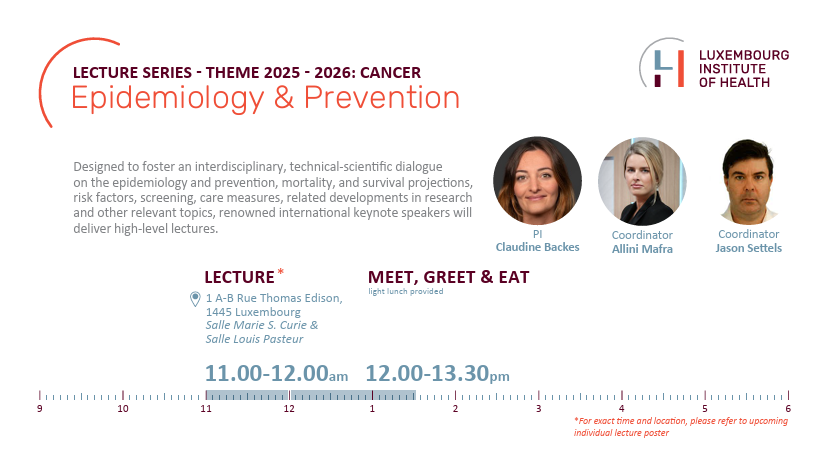
Lecture series – Epidemiology & Prevention 2025-2026
Epidemiology & Prevention
18/06/2026 10:00