🇬🇧 Deubiquitinases (DUBs) modulate type-I interferon & IL-1ß pathways
- Omics meets physics
Speakers
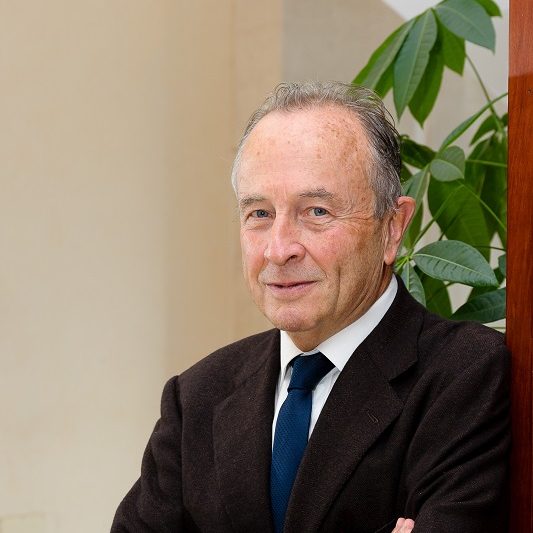
Professor of Biochemistry and Life Science Mass Spectrometry
University of Oxford
Abstract
When proteins reach the end of their lifetime, most of them get modified by the attachment of ubiquitin, a small protein of 76 amino acids. This modification has been implicated not just in the elimination of damaged proteins, but also in physiological proteolytic control of processes such as transcription, signal transduction, and cell cycle transitions. Much less is known about enzymes that remove ubiquitin from substrate proteins, referred to as deubiquitylating enzymes (DUBs). Members of the DUB family are already known to contribute to neoplastic transformation and are implicated in immunity and neurodegenerative diseases, making them attractive targets for drug design.
Our studies revealed that one of these DUBs, USP18, cleaves a ubiquitin analogue, ISG15, and negatively regulates the type-I interferon (IFN-I) response. We show that USP18 shows synthetic lethality with IFN-I leading to cancer cell vulnerability.
Another DUB, ubiquitin C-terminal hydrolase 1 (UCH-L1), interacts with the NACHT domain of NLRP3, a component of the inflammasome complex. Downregulation of UCH-L1 decreases pro-interleukin-1β (IL-1β) levels. UCH-L1 chemical inhibition with small molecules interfered with NLRP3 puncta formation and ASC oligomerization, leading to altered IL-1β cleavage and secretion, particularly in microglia cells, which exhibited elevated UCH-L1 expression as compared to monocytes / macrophages. Altogether, we profiled NLRP3 inflammasome activation dynamics and highlight UCH-L1 as an important modulator of NLRP3-mediated IL-1β production, suggesting that a pharmacological inhibitor of UCH-L1 may decrease inflammation-associated pathologies.
Responsible Scientist
Gunnar Dittmar
Host
Department of Infection and Immunity (LIH) University of Luxembourg


LOCATION
Lecture:
House of BioHealth
Big conference room at the ground floor
29 rue Henri Koch,
L-4354 Esch- sur- Alzette, Luxembourg
LECTURE: 10:30am – 11:30am
+ 30 min. Q&A
MEET & EAT
12:30pm – 14:00pm
Please note that registration is mandatory for meeting after presentation by sending an email to michelle.roderes@lih.lu
Supported by:

Supported by the Luxembourg National Research Fund
RESCOM Lecture series (19468465)
DATA PRIVACY
Read more about the “Data Protection Notice: processing of personal data in the scope of events’ management”.