News
Population health survey conference highlights the value of health data for Luxembourg
The Luxembourg Institute of Health (LIH), in collaboration with the Luxembourg Health Directorate, organised a conference to discuss findings from the latest European Health Interview Survey in Luxembourg (EHIS-LUX) and explore how health data can inform health policies
- Socio-Economic & Environmental Health & Health Services
- Department of Precision Health
- Competence Centre for Methodology and Statistics
- Public Health Expertise
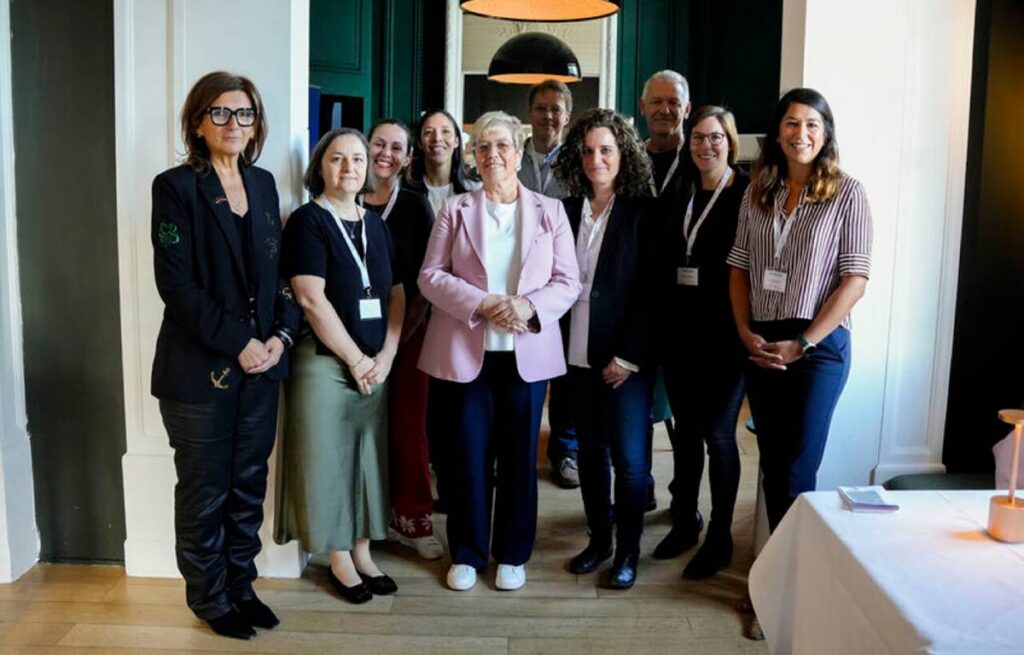
On 25 September 2026, the EHIS-LUX conference in Luxembourg brought together public health experts from Luxembourg and abroad to examine preliminary results from the 2025 EHIS and discuss how health data can support evidence-based decision-making. Photo copyright Luxembourg Ministry of Health.
A European survey with national relevance
The European Health Interview Survey (EHIS) collects harmonised information on the health of residents aged 15 and over across European countries. Developed in collaboration with Eurostat, the European Commission’s statistical office, it covers health status, chronic conditions, lifestyle habits, and healthcare.
Luxembourg has participated in the 2014, 2019 and 2025 surveys, with more than 4,000 participants in each. The data contribute to health indicators published by Eurostat, enabling comparisons between countries and monitoring trends over time. These indicators help researchers and public authorities better understand population health needs and inform policy development.
From survey results to health system insights
Held at the Tero House in Luxembourg City, the conference was opened by Martine Deprez, Minister of Health and Social Security. Dr Maria Ruiz-Castell, leader of the CARES group in the Department of Precision Health at the LIH and EHIS project leader, as well as Gwenaëlle Le Coroller (CCMS), presented the latest survey under the title EHIS 2025: From data collection to results.
The programme also explored how health indicators can be used to evaluate health system performance, with a presentation by Anne-Charlotte Lorcy from the Health Observatory (ObSanté). Guillaume Osier from STATEC discussed how administrative data can complement surveys, using Luxembourg’s EU-SILC survey as an example.
Further contributions examined other approaches to health data collection and analysis. Nadine Berndt from the Luxembourg focal point of the European Union Drugs Agency presented the European Web Survey on Drugs. Stefaan Demarest from Sciensano discussed modernising EHIS data collection in Belgium, while Canden Kendir from the OECD explored how health surveys can be selected to address specific policy questions.
Strengthening the evidence base for public health
By providing information on health status, health behaviours and healthcare use, the EHIS helps identify priority health issues, monitor trends over time, and inform public health action Combining survey findings with administrative data can offer a more comprehensive picture, while international comparisons place national findings in a broader European context.
The EHIS gives us a valuable overview of the health of Luxembourg’s population and how it changes over time. By looking at health conditions, lifestyle habits and access to healthcare, we can understand people’s needs and better guide public health decisions,
said Dr Maria Ruiz-Castell, leader of the CARES group at the LIH.
Scientific Contact
Related News