
News

Welcome to our final newsletter of 2025! As the year comes to a close, we have a few final updates for you.
Publications
Dr Sophie Pilleron has been part of some significant work, recently accepted for publication in leading journals.
The first paper, accepted in ESMO Open, is titled: ESMO/SIOG Cancer in the Elderly Working Group Pragmatic Strategies for Clinical Trial Designs and Endpoints in Older Adults with Cancer.
This work was written in collaboration with wider expert consortium from across Europe, including Capucine Baldini, Anna Rachelle Austria Mislang, Kwok-Leung Cheung, Sophie Pilleron, Hans Wildiers, Siri Rostoft, Nina Rosa Neuendorff, Maxime Frelaut, Ravindran Kanesvaran, Demetris Papamichael, Shane O’Hanlon, Martine Puts, Florence Canoui-Poitrine, Lissandra Dal Lago, Wee Kheng Soo, Anita O’Donovan, Fabio Gomes, Lisa Cooper, Beverly Canin, Michaël Bringuier, Nicolò Matteo Luca Battisti, Laura Biganzoli , and Etienne Brain on behalf of the ESMO/SIOG Cancer in the Elderly Working Group.
The second paper, accepted for publication by the Lancet Healthy Longevity, is entitled: Defining and Addressing Loneliness in Older Adults with Cancer: An International Delphi Consensus from the MASCC Geriatrics Study Group.
This work was written in collaboration with Enrique Soto-Perez-de-Celis, Kristen Haase, Sriram Yennu, Etienne Brain, Chad Han, Jorn Herrstedt, Ayumu Matsuoka, Joana Marinho, Lewis Mustian, Sophie Pilleron, Imogen Ramsey, Christopher Steer and Matti Aapro.
We are excited to share the official links to these pieces upon formal publication – so watch this space and our LinkedIn page to read them hot off the press!
Lastly, following the success and engaging discussion at the conference for the International Society of Geriatric Oncology, Dr Pilleron wrote a thought-provoking Letter to Editor entitled “Time to modernise research in geriatric oncology: Reflections from the 2025 International Society of Geriatric Oncology Annual Meeting.” which has been published by the Journal of Geriatric Oncology. Read the piece here: https://www.sciencedirect.com/science/article/pii/S1879406825006538?dgcid=author
SIOG Successes
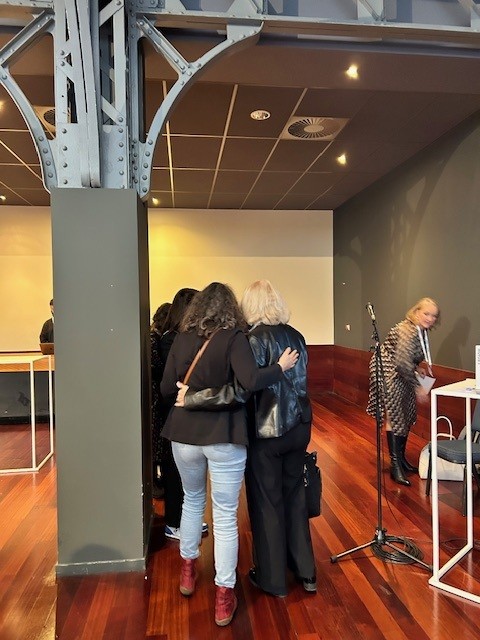
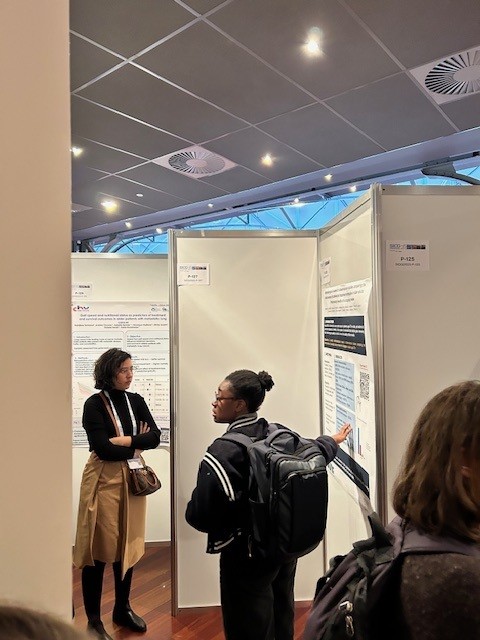
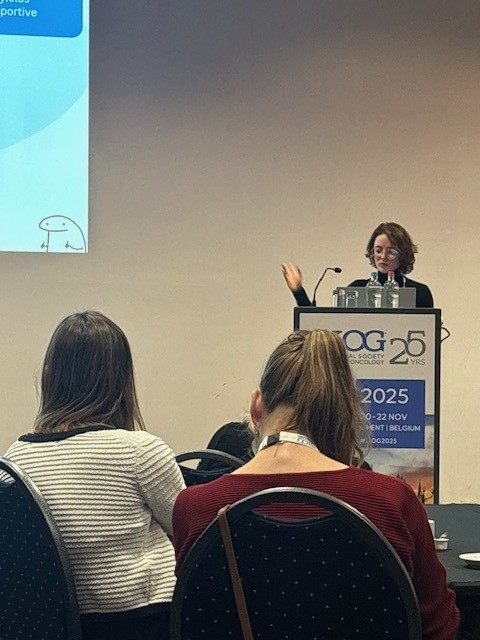
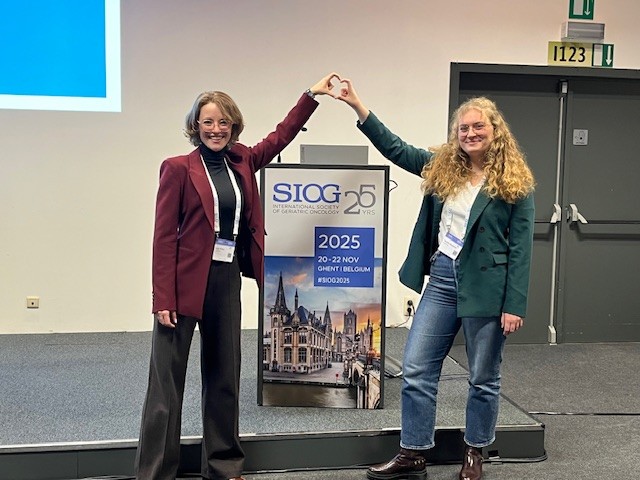
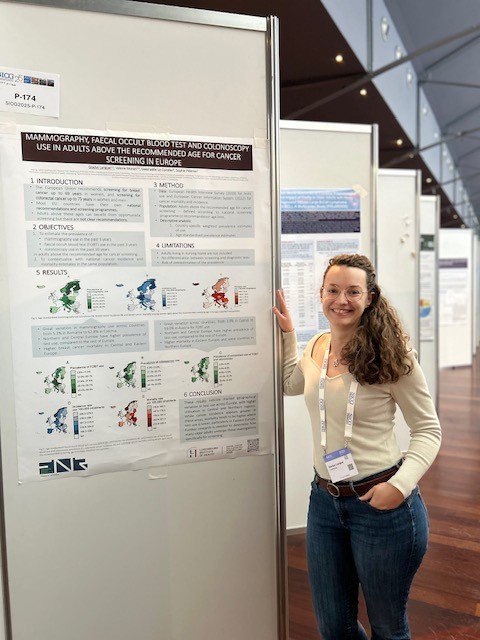
From the 20th to 22nd of November, the International Society of Geriatric Oncology (SIOG) annual meeting was held in Ghent, Belgium. The conference was busy for the ACADI team. Gladys Langue, PhD student, presented a poster on her latest analysis of European Health Interview Survey data on faecal blood tests, colonoscopy and mammography use, garnering considerable interest in her work.
Dr Clémence Bafei also presented her ongoing project on treatment in colorectal cancer, showcasing some early insights from her scoping review.
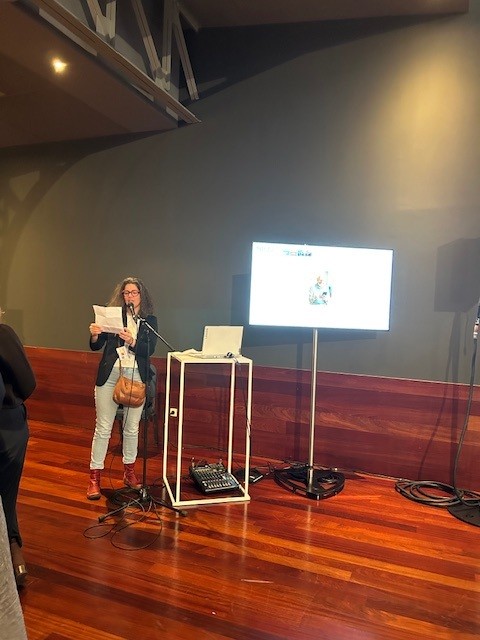
Dr India Pinker was invited to give a talk on qualitative research methods during a session on research methods in geriatric oncology, gathering significant interest in both the methods and the SIOG Methods working group. We look forward to seeing some collaborations grow from this.
Dr Sophie Pilleron showcased her leadership on multiple fronts at the conference, hosting two poster sessions on behalf of the Nursing, Allied Health and Scientists Interest Group as well as the SIOG Methods working group. Additionally, Dr Pilleron gave an exciting update on the Publication Committee she is chairing and on the growth of SIOG methods working group over the past year at the SIOG General Assembly.
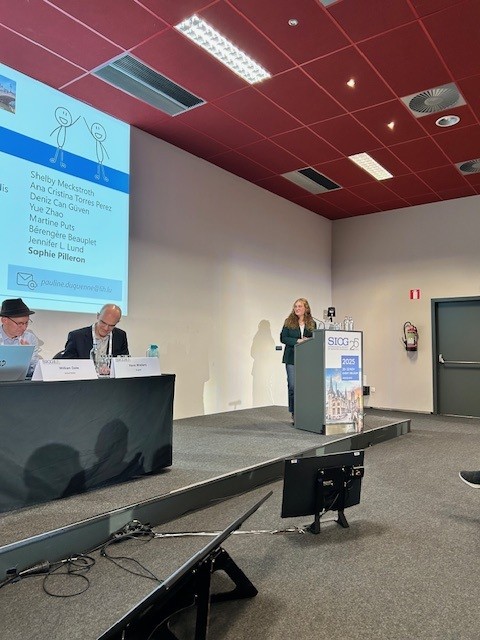
Finally, Dr Pauline Duquenne took centre stage to give a plenary talk on her systematic review on mortality prediction models, giving the audience a shock, revealing that all current models for geriatric oncology are at high risk of bias and thus not fit for clinical use.
Donations to our work
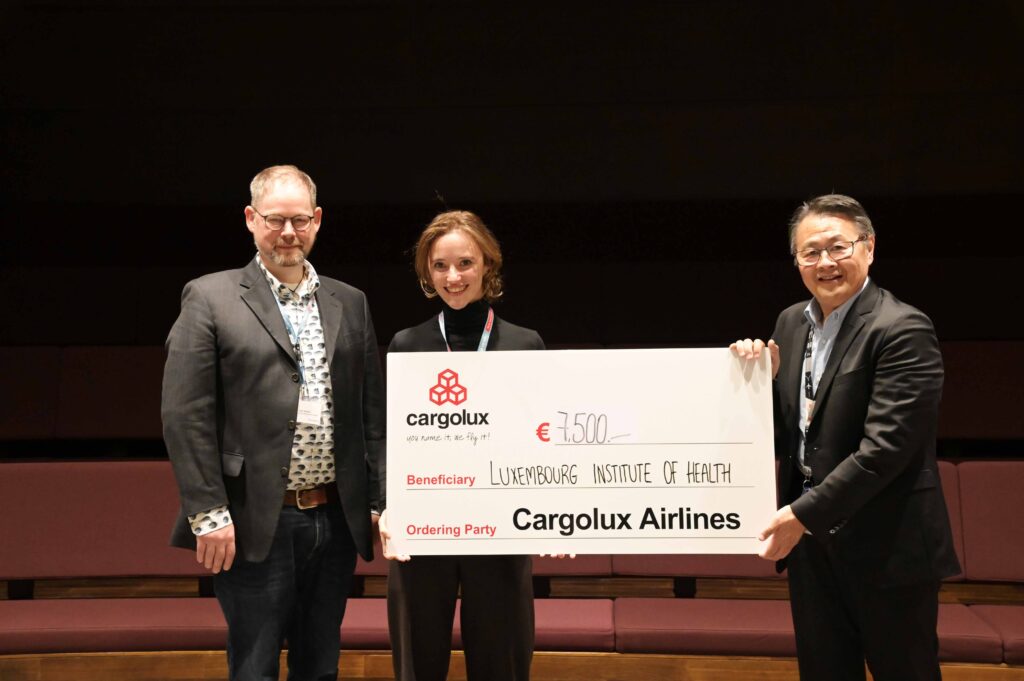
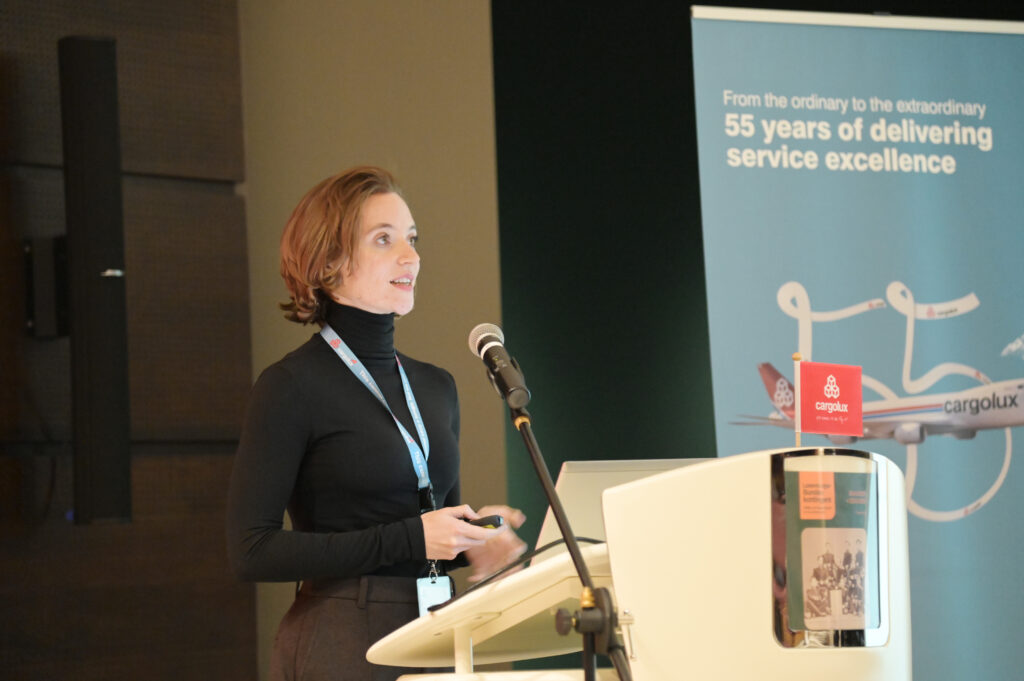
On the 19th of November, Dr India Pinker, together with Dr Lars Geffers from the LIH Science Office, presented an overview of the cancer research conducted at LIH, highlighting several of ACADI’s contributions to the field. The presentation was delivered to Cargolux employees during their charity event, One Evening for All, held at the historic Musée Dräi Eechelen in Luxembourg City.
We were honoured to take part alongside a number of outstanding organisations contributing to positive change in Luxembourg and beyond, including the Croix-Rouge Luxembourgeoise, Fondation Wonschstär, and Handicap International Luxembourg.
Following the event, Cargolux made a generous donation of €7,500 in support of our research. We are sincerely grateful to Cargolux for their support.
Talks
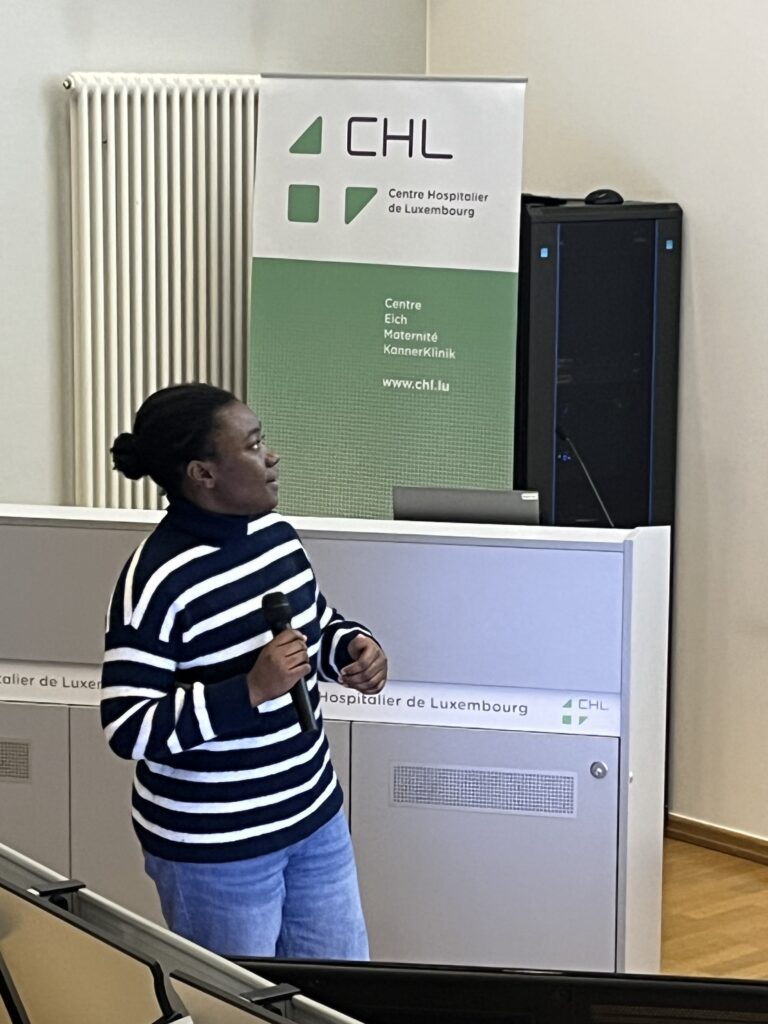
On 2nd of December, Dr Clémence Bafei represented ACADI at the Department of Precision Health staff information meeting. She presented the recently launched EMPOWER project, funded by the European Union, with particular emphasis on the team’s role in the monitoring and evaluation of the project’s intervention. Well done Clémence!
Study Clearance
Part one of our study, TDM-Café, has now received all required approvals and is ready to launch in January 2026. The study, led by Dr India Pinker, seeks to capture the perspectives of older adults with lived experience of cancer, as well as those of family members, caregivers, and healthcare professionals, to inform the future of local research on treatment decision-making.
The first phase consists of an anonymous survey designed to inform the second phase of the project: a World Café methodology aimed at identifying and prioritising key directions for future research. This study is made possible through the support of ThinkPink Luxembourg, whose funding underpins the project, and has been further supported by the generous donation from Cargolux.
RESCOM Lecture Series
For a strong close to the year, we are delighted to host Professor Miguel Hernán of Harvard University as our final speaker for our RESCOM Lecture Series in 2025. Professor Hernán is widely regarded as one of the most influential figures in modern causal inference, and he will deliver his lecture on 18th of December 2025.
His talk will focus on how decisions in prevention and treatment increasingly depend on causal inferences drawn from healthcare databases, and on how emerging computational tools may shape this process. The session will examine the conceptual foundations of “Causal AI” and critically assess its promise and limitations for automating causal research in the health sciences.
We hope this lecture will spark renewed methodological excitement as we look ahead to 2026, with further exciting speakers joining the series from February.
Thank you for following us in 2025. We wish you and all your loved ones a very happy end to 2025 and start to 2026.
Until next time, keep well!
ACADI Team