News
LIH Head of Quality Management recognised at Luxembourg’s World Standards Day
Dr Lehmann named Luxembourg’s National Delegate in Standardisation 2026
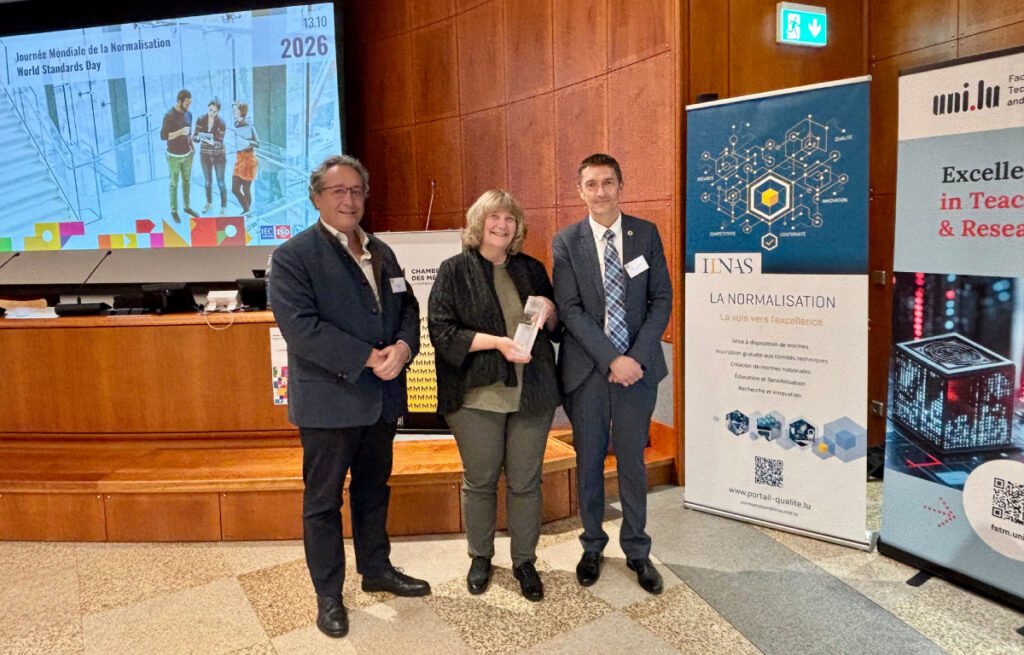
Dr Sabine Lehmann, Head of Quality Management at the Luxembourg Institute of Health (LIH), has been selected by the Luxembourg standardisation body ILNAS (Institut luxembourgeois de la normalisation, de l’accréditation, de la sécurité et qualité des produits et services) as “National Delegate in Standardisation 2026” for her long-standing contribution to standardisation and quality in biomedical research. The award was bestowed on October 13th 2026 during the general conference organised on the occasion of World Standards Day at the Chambre des Métiers.
The distinction recognises Dr Lehmann’s extensive involvement in quality management and international standardisation, spanning more than three decades. A chemist by training, she obtained her doctorate from the Free University of Berlin and began working in quality assurance in Germany, where she contributed to the initial ISO 9001 certification of BRAHMS Diagnostica in 1992.
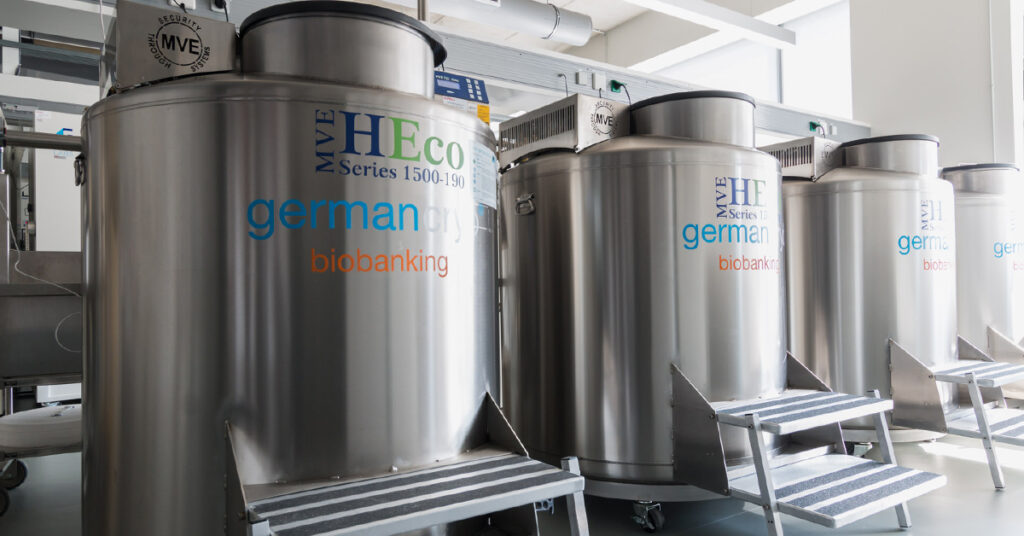
After moving to Luxembourg in 2010, Dr Lehmann took responsibility for quality management at the Integrated Biobank of Luxembourg (IBBL), where she implemented the quality system according to ISO 9001 and ISO 17025, leading to certification and accreditation in 2014 and 2016 respectively. Her expertise has also contributed directly to the development of international standards. Dr Lehmann represents Luxembourg as a technical expert in ISO standardisation committees and was actively involved as a co-project leader in the development of ISO 20387, the international standard defining general requirements for biobanking. She currently serves as co-project leader within ISO/TC 276/WG 2 for the revision of ISO 20387:2018.
Dr Lehmann’s distinction also reflects the importance LIH places on quality and standardisation as essential foundations for excellent biomedical research. At LIH, quality is embedded in the way research is conducted, from research integrity and ethics to health and safety, risk management and operational excellence. Through its integrated Quality Management System (iQMS), the institute brings these dimensions together to support robust and reliable research processes.
Quality and standardisation are not an end in themselves. Standards build trust in science. By providing recognised frameworks for how samples are handled, data are generated and processes are managed, they help ensure that research results are reliable, reproducible and trustworthy
explains Dr Lehmann.
This is particularly important in translational research, where robust and standardised processes are essential to move scientific discoveries towards clinical application and, ultimately, generate meaningful benefits for patients.
“I am very grateful to ILNAS for this recognition, as it highlights the contribution of a whole team of experts who help shape international standards while ensuring that quality remains at the heart of biomedical research activities”, she concludes.
Scientific Contact
Related News