News
BrainEXP: bringing AI-powered brain imaging closer to clinical application
LIH project receives FNR TREK funding to advance an innovative MRI-based approach for Alzheimer’s disease biomarkers
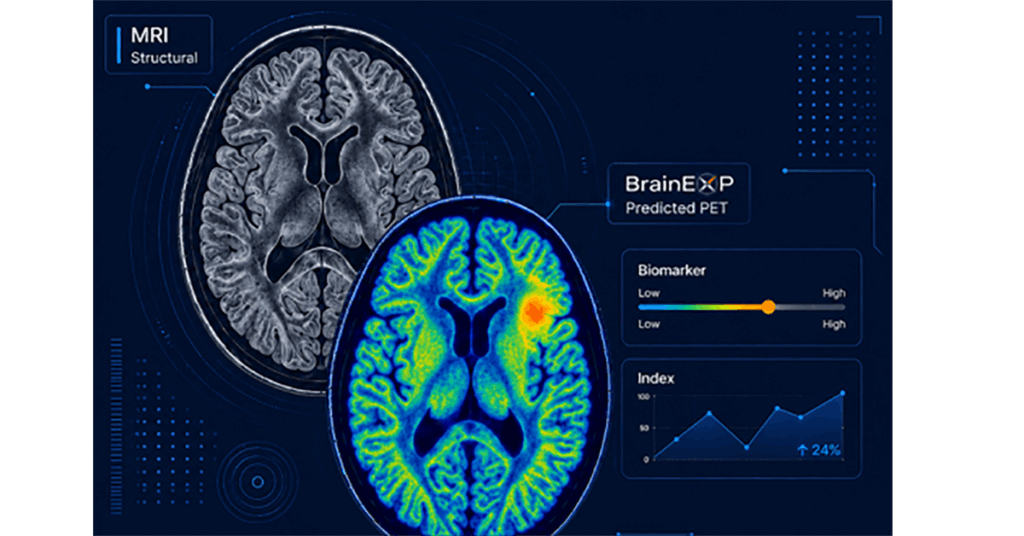
The BrainEXP project, developed by the Brain Imaging and Neuro-Epidemiology (BraINE) research group at the Luxembourg Institute of Health (LIH), has been selected for funding under the Luxembourg National Research Fund (FNR) TREK programme. Led by Dr Olivier Keunen and Dr Magali Perquin, the project will further develop an innovative AI-powered platform designed to derive Alzheimer’s disease-related biomarker information from routine MRI scans, with the aim of bringing the technology closer to real-world clinical application and commercialisation.
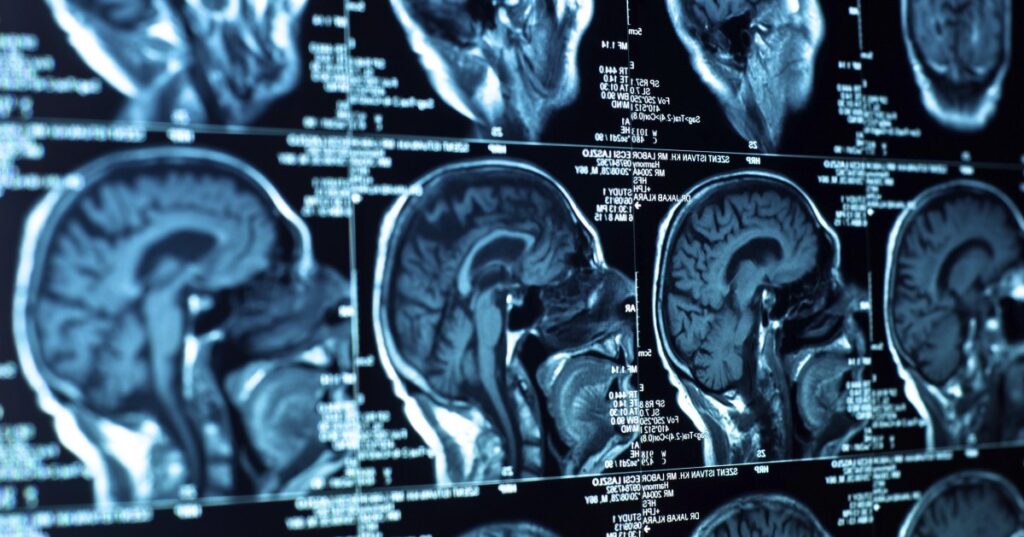
Diagnosing and monitoring Alzheimer’s disease increasingly relies on biological markers that can reveal characteristic changes in the brain. Positron emission tomography (PET) can provide highly valuable information on biomarkers such as amyloid beta, tau and brain metabolic activity, but access remains limited by its cost, specialised infrastructure and use of radioactive tracers. MRI, by contrast, is non-invasive, more widely available and considerably less expensive.
BrainEXP seeks to bridge this gap. Developed within LIH’s Brain Imaging and Neuro-Epidemiology research group, the AI-powered platform uses routine MRI data to generate PET-equivalent information relevant to Alzheimer’s disease. Its flagship application, BrainEXP-AD, is being developed to provide information on amyloid beta, tau and brain metabolic activity without requiring an additional PET examination. The approach could ultimately make advanced brain biomarker information more accessible, supporting earlier diagnosis and patient management while potentially facilitating the identification and monitoring of participants in Alzheimer’s disease clinical trials. In the longer term, the underlying approach could also be extended to other neurological conditions.
The FNR TREK funding marks an important step in translating BrainEXP from a promising research development towards a solution that can eventually be tested in real-world settings. Over the course of the project, the team aims to advance BrainEXP-AD from Technology Readiness Level 3 (TRL3), corresponding to a validated research prototype, to TRL5 and a Minimum Viable Product suitable for further testing.
Alongside continued scientific and technical development, the project will explore the pathway towards clinical and commercial implementation. This includes preparing for relevant European regulatory requirements, developing a user-friendly interface, and defining the intellectual property, market and business strategy needed to bring the technology closer to users.
The team has already developed a prototype and is working with clinical expertise to ensure that its development responds to real medical needs. At this stage, the research relies on anonymised public datasets, with further validation and real-world testing forming part of the technology’s longer-term development.
Beyond its immediate research objectives, BrainEXP illustrates LIH’s ambition to translate scientific and technological innovation into solutions with tangible potential for patients and healthcare. By combining expertise in brain imaging, epidemiology, artificial intelligence and clinical practice, the team aims to establish a strong basis for the future uptake of the technology, including potential licensing or the creation of an LIH spin-off.
BrainEXP is about making valuable information on brain health more accessible by building on an imaging technique that is already widely used in clinical practice. With the support of the FNR TREK programme, we now have the opportunity to take our research beyond the prototype stage and explore how it could be translated into a robust solution with real clinical and commercial potential. Ultimately, our ambition is to help make advanced Alzheimer’s disease biomarkers available to more patients, without the cost, radiation exposure and limited accessibility associated with PET imaging
explains Dr Olivier Keunen, leader of the BraINE group at LIH.
The project kicks off in October 2026 and is structured around two consecutive 12-month TREK phases. The FNR contribution amounts to EUR 372,437 across the two phases.

Scientific Contact
Related News